
Finding Gates Residents From Records
There is no single public roll of everyone in the Town of Gates. The useful trail changes with the question. A recorded owner is best checked through the assessment roll and land index. A past householder may appear in a library directory. A current voter check belongs in the Monroe County tool and requires enough identifying information to avoid a same-name error. Town-held material that is not posted online may be requested through the Town Clerk under FOIL, but an agency need not create a new list of people for a request.
Keep the label attached to each result. A tax-roll owner is not automatically every person at the parcel. A voter match is not a roster of the block. A directory entry is dated evidence, not a promise of a current address. That restraint makes a Gates residents directory search more useful for reconnecting with family history, checking a public record, or tracing a house than a loose list of names.
- Start with the Gates assessment roll or property-data gateway using an owner name, a physical address, or a parcel identifier. Save the roll year, the situs, and the deed book and page.
- Use the Monroe GIS parcel layer to make sure the address and parcel are in the Town of Gates, especially when the mailing city says Rochester or Spencerport.
- When all five identifying fields are known, use the Monroe voter lookup for a controlled registration check. Do not treat it as a street-wide list.
- Follow the recorded owner through the Monroe County Clerk's deed index, noting grantor, grantee, recording date, legal description, and document reference.
- For an older person or address, consult Rochester Public Library directory and newspaper collections, then make a precise FOIL request for an existing town record if needed.
Gates Resident Records by Custodian
Gates records are spread across town, county, and state custodians. The Town Clerk holds town public records and accepts town FOIL requests. The Gates Assessor and Monroe County Real Property Services maintain the address-keyed assessment trail. The Monroe County Clerk is the registrar of deeds. Monroe Elections maintains the practical voter lookup. Knowing the keeper prevents a request for a deed from going to a town counter or a request for a town permit file from going to the county land index.
Monroe Board of Elections
435 Smith Street
Rochester, NY 14608
585-753-1550
For town minutes, local forms, marriage records, or another existing town-held record, the Gates Town Clerk and Tax Receiver is the local starting point. The street-by-street parcel chain is developed in the Gates street directory.
Gates Parcel Records Start a Search
The Town property-data gateway directs users to tax, parcel-report, and prior-sale sources. Its caution matters: the county system may not yet reflect Gates' updated assessment, and the Town says the data is not guaranteed. For current confirmation, use the roll and contact the Assessor. The roll supplies a durable connection among a location, an owner mailing address, assessment details, a tax-map number, and a deed book/page reference.
The county real-property office maintains assessment rolls, tax maps, title-change data, and subdivision information. A parcel number is safer than a bare street number when a lot changes or an address is written differently. The official roll does not expose phone or Social Security fields. It is an assessment record, which means it documents an owner and land data, not all people who may be present.
The Gates property-data gateway is the correct starting point for a Gates residents directory search based on property, but its county links should be checked against the current town roll.
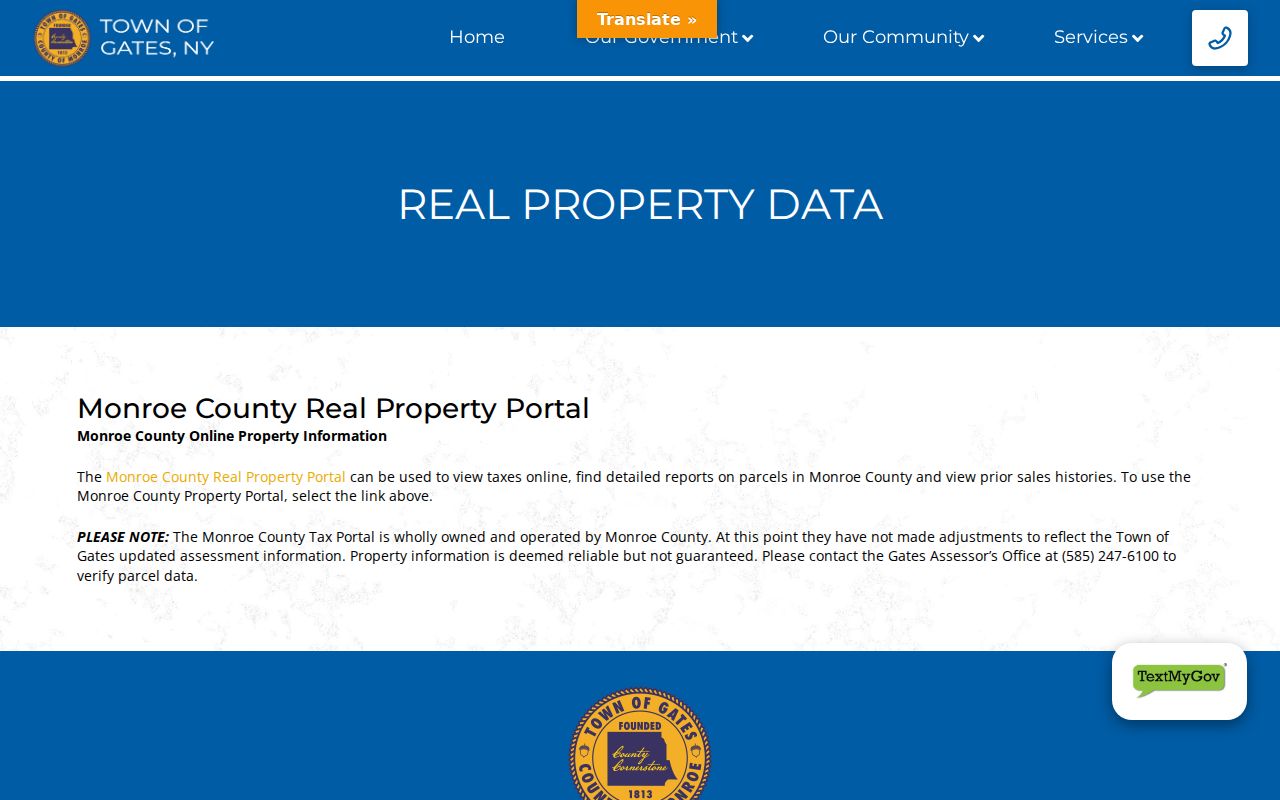
Use the displayed gateway as an access path, then preserve the roll year and parcel details before moving to a deed or map record.
Gates Voter Lookup Fields Exactly
The county voter-registration form is a personal lookup, not an unrestricted directory of Gates residents. The visible form uses the five fields below. No field was marked required in the inspected page, and the available research did not expose a result cap, export option, historical cutoff, or complete no-match message. Use a standardized street suggestion when the control offers one.
| Visible field | Input type | Required mark | Verified format or behavior |
|---|---|---|---|
| Street # | Text | Not marked | Numeric street number |
| Street Name | Autocomplete/text | Not marked | Choose the standardized street suggestion |
| Zip Code | Text | Not marked | Five-digit ZIP field |
| Last Name | Text | Not marked | Surname used for lookup |
| Date of Birth | Text/date | Not marked | MM/DD/YYYY |
The page can return registration, polling-place, sample-ballot, absentee or mail-ballot status, and elected-official information for the entered person and address. New York Election Law §5-508 identifies public registration fields, but Election Law §3-103(5) limits use of voter-registration information to election purposes. A protected address may be withheld, so a no-result does not establish that a person is absent or unregistered.
The Monroe lookup is a practical Gates residents directory verification route. It should be used only when the search is tied to an election purpose and the identifying fields are already known.
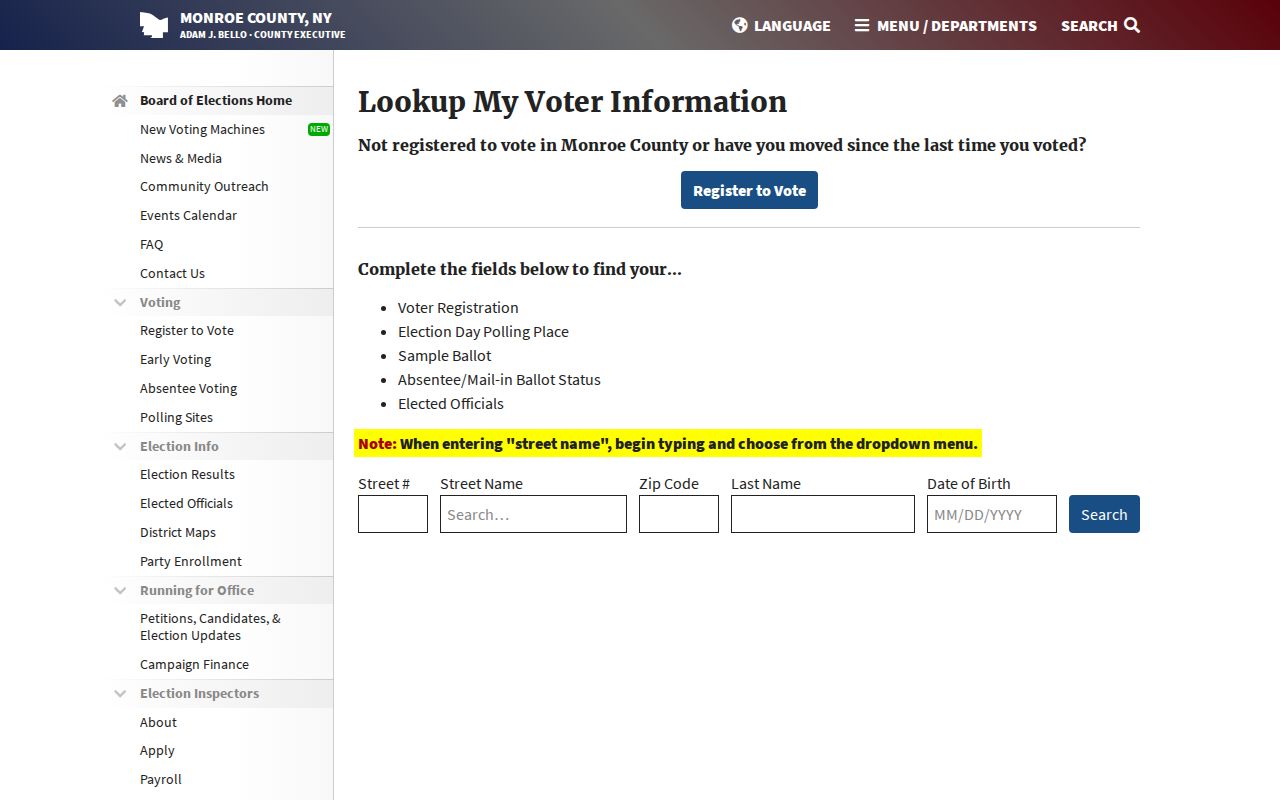
The form's address and date fields help distinguish similar names, but they do not turn the tool into a household list.
Gates Deed Index Access in 2026
The Monroe County SearchIQS index is the recorded-land path for a Gates owner or parcel. For deeds, the official coverage help lists indexing from August 28, 1973 and images from January 2, 1976. Historical grantor/grantee books cover 1821 to 1907 and 1914 to 1975 as index-only ranges. A current owner can be searched as grantee, then the prior grantor can be searched as an earlier grantee to work backward.
Record the indexed party role, instrument type, recorded date, book/page or document number, legal description, municipality, and image availability. The live field labels, pagination, and export behavior were not exposed in the research, so those functions should not be assumed. The index is free, but the County Clerk's April 2026 notice says online document images now require a subscription. Clerk public terminals still provide free index and image access.
Insider tip. A free index result can be enough to capture the book/page trail. If an image is needed, verify the instrument at a Monroe County Clerk public terminal instead of assuming that a link on the screen opens the document.
Current Gates Resident Sources Compared
Current sources for Gates residents have distinct coverage. The assessment roll names recorded owners. The voter tool verifies a qualifying entered voter. The land index lists parties to filed instruments. Town forms and community pages may identify a contact route, but the research found no public all-resident index, no public Gates permit search, and no comprehensive association roster. Choose a source based on the fact being tested, not on the hope that every household will appear.
| Gates source | People or address scope | Custodian | Access limit |
|---|---|---|---|
| Assessment roll and property gateway | Recorded owner, situs, mailing, parcel, value | Gates Assessor / Monroe RPTS | Public roll and gateway, confirm current data |
| Voter registration lookup | Entered registered voter and election information | Monroe Elections | Controlled personal lookup, election-purpose rule |
| SearchIQS land index | Grantors, grantees, and recorded parties | Monroe County Clerk | Free index; online image subscription may apply |
| Building or planning file | Addressed application or existing file | Gates Building Department | Request or FOIL route, no public case index found |
| Library directories | Historical listed householders and addresses | Rochester Public Library | Year and collection coverage vary |
A public record may show a name, but it does not necessarily show present residence. The strongest practice is to match two independent details, such as a name and parcel description or a name and a properly entered voter address. This protects against same-name errors and shifting mailing information.
Gates Addresses Need Two Labels
For Gates directory research, label the physical parcel as the situs and label the tax-correspondence destination as the mailing address. A legal description identifies the land conveyed. These are not interchangeable. The 2025 tentative roll gives a concrete local example: parcel 103.05-1-62.1 has a situs at 2358 Manitou Road, while its owner's mailing address is Spencerport, NY 14559. That does not move the parcel out of Gates.
Myth: A Rochester postal city means the parcel is inside the City of Rochester. It does not. Gates facilities often use Rochester postal addresses, and the town's history includes boundary changes. Confirm municipal location through the parcel, GIS, and legal description rather than the city printed on mail.
Use the county GIS resource to connect an address to a parcel polygon. It is a map-to-parcel bridge, not a resident directory. The parcel layer's address display and geometry help verify location; the assessment record supplies owner and mailing fields.
Gates FOIL Requests for Existing Files
When a town record is not posted, the Gates FOIL request route asks for the requester's name, contact information, requested records, delivery choice, and address fields. Describe an existing record closely, such as a dated permit file, minutes, or a specific address record. The request goes to the Town Clerk and Records Access Officer, and a printed request can be mailed or delivered to Town Clerk, 1605 Buffalo Road, Rochester, NY 14624.
Under the Town's FOIL information, the acknowledgment period is five business days and the default copying charge is $0.25 per page. Those details do not guarantee release. New York Freedom of Information Law, Public Officers Law Article 6, contains privacy and other exemptions. Asking for a known file is more effective than asking for a newly created Gates residents directory.
The official Gates FOIL form provides a direct record-request path when the online portal ends.
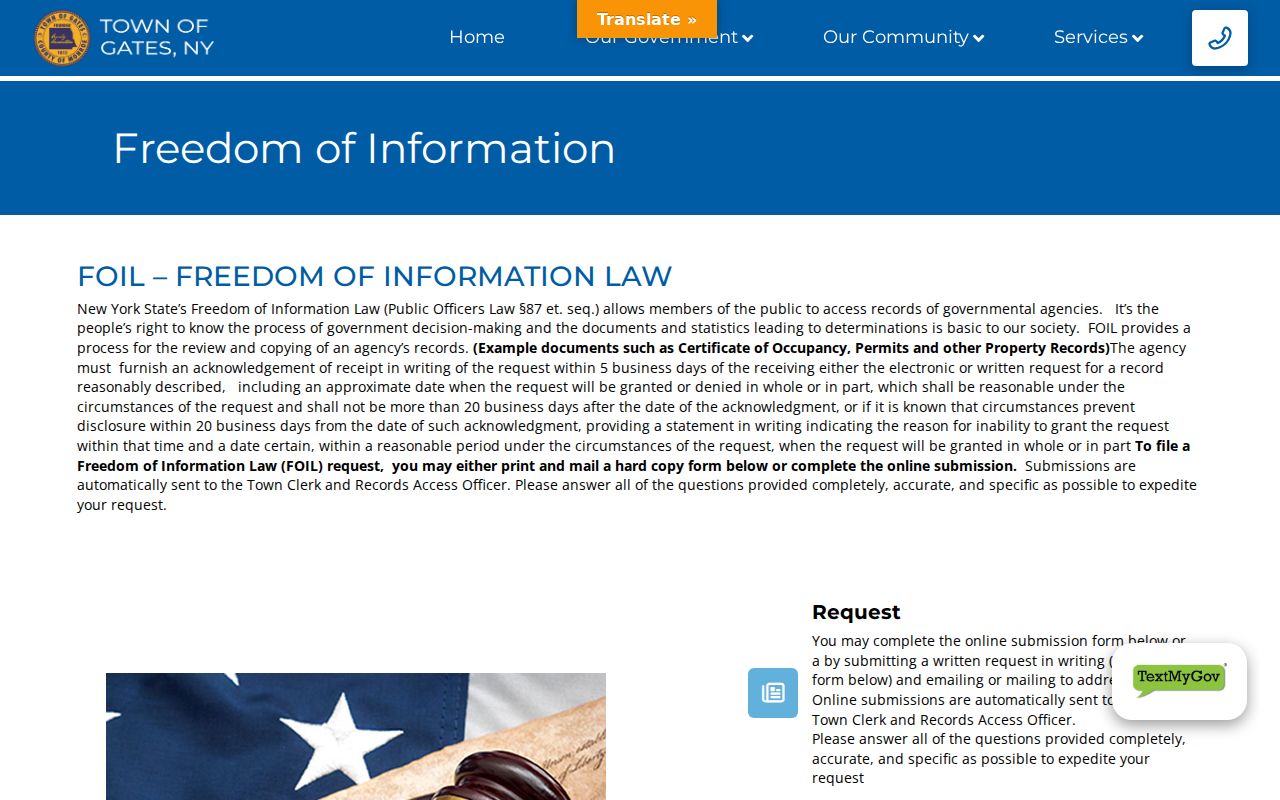
A precise description, the address or record date, and a request for the preferred delivery format can help the Records Access Officer identify an existing file.
Gates Official Records and Commercial Lists
Commercial people-finding lists may combine public filings, old directories, licensing data, and other information. They can be stale, join similar names, or omit protected records. They are not a replacement for a Gates custodian's source. For a question about title, a recorded deed and the roll have more weight. For a historic household, a dated directory and the underlying library volume matter more than a current-looking summary.
| Research choice | Useful strength | Check before relying |
|---|---|---|
| Official town, county, or state record | Named custodian, record date, and defined purpose | Coverage period, access limits, and correction route |
| Commercial compiled list | May suggest a name variant or dated lead | Underlying source, identity match, and current status |
| Historical directory | Address and householder evidence for its publication year | Year, publisher, coverage area, and OCR or transcription error |
Use a compiled result only as a prompt to find the underlying custodian record. For a Gates parcel, that usually means the assessment roll, GIS, or deed index. For a person from an earlier era, the library directory shelf and a newspaper index provide more transparent dated evidence.
Gates Registry Search Has Narrow Scope
The New York DCJS public registry search is a specialized public-safety route with its own legal notice. It is not a general Gates residents directory and does not identify most people who live in the town. A result or no-result should never be stretched into a claim about a household, a street, or a person's history beyond the official record's stated scope.
The official DCJS search entry is the relevant source when its narrow statutory category is the question. For ordinary address, ownership, or historical research, return to the assessment, deed, voter, or library routes instead.
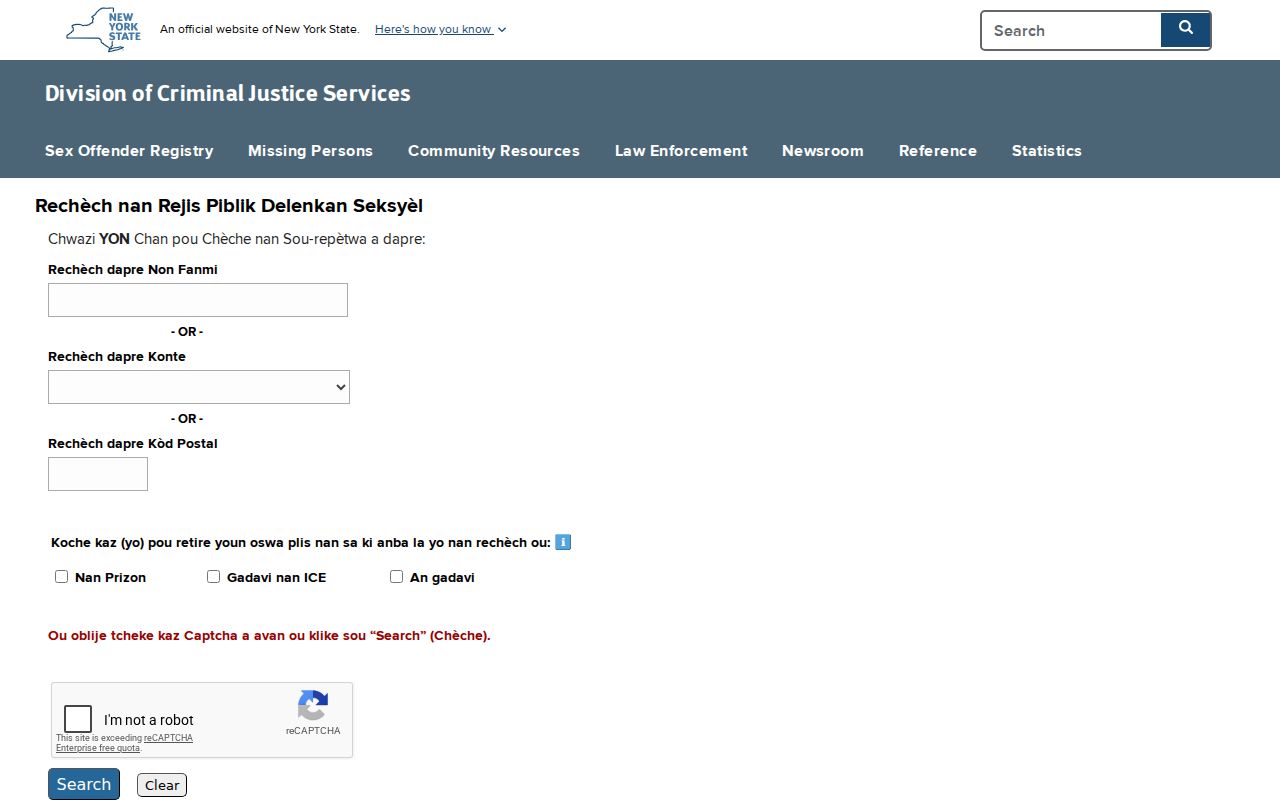
The presence of an official search route does not create a broad list of Gates residents or remove the need to follow its use instructions.
Gates Directory Terms in Plain Words
A few labels recur across Gates records. A parcel is the tax-map unit that ties a roll, map, and deed trail together. The situs address is the physical parcel location, while the owner mailing address is where tax correspondence goes. A grantor transfers an interest in a deed and a grantee receives it. A roll is the assessment listing for a given year.
An index is a finding tool, not always an image of the underlying document. A criss-cross directory, also called a house or street directory, works from an address to a listed householder rather than from surname to address. For historic Gates work, that distinction matters because the Rochester house directories cover 1892 to 1920 and house sections entered main directories from 1922.
Gates Privacy Limits and Lawful Use
Open records have boundaries. New York's Address Confidentiality Program protects actual addresses for qualified participants. Protected-voter rules can withhold an address from ordinary voter access. DMV personal information is limited by the federal Driver's Privacy Protection Act, and sealed court, vital, and adoption material remains closed. A missing result may reflect privacy protection, a date gap, or a source's limited purpose.
Lawful use. Use Gates records for a legitimate personal, civic, or historical purpose, keep sensitive details to a minimum, and never use address information to stalk, harass, threaten, or intimidate anyone. New York's stalking and harassment laws can apply to a course of conduct built from public details.
For a suspected bad deed-copy offer or property-fraud notice, compare it with the official county records source and its published fees. For a safety concern, preserve the communication and contact Gates Police through an official channel.
Gates Directory Collections Across Time
Historical Gates resident evidence is strongest at Rochester Public Library Local History & Genealogy and the NY Heritage Rochester directory collection. Rochester directories begin in 1827, digitized material reaches through 1946 with gaps, and the regional suburban run for 1930 to 1940 includes Gates. House directories provide an address-to-householder route for 1892 to 1920, while later main volumes have house sections.
Use the directory year, old street spelling, number, and publisher together. A local historical archive can also hold material by request. The difference between a listed householder, a deed party, and a census household should stay visible in the notes. Each source is evidence for its own date and purpose.
Monroe County Real Property Services complements those older collections with today's parcel and assessment bridge.
Linking a dated directory address to a current parcel requires care, especially where an old street number, lot line, or municipal boundary has changed.